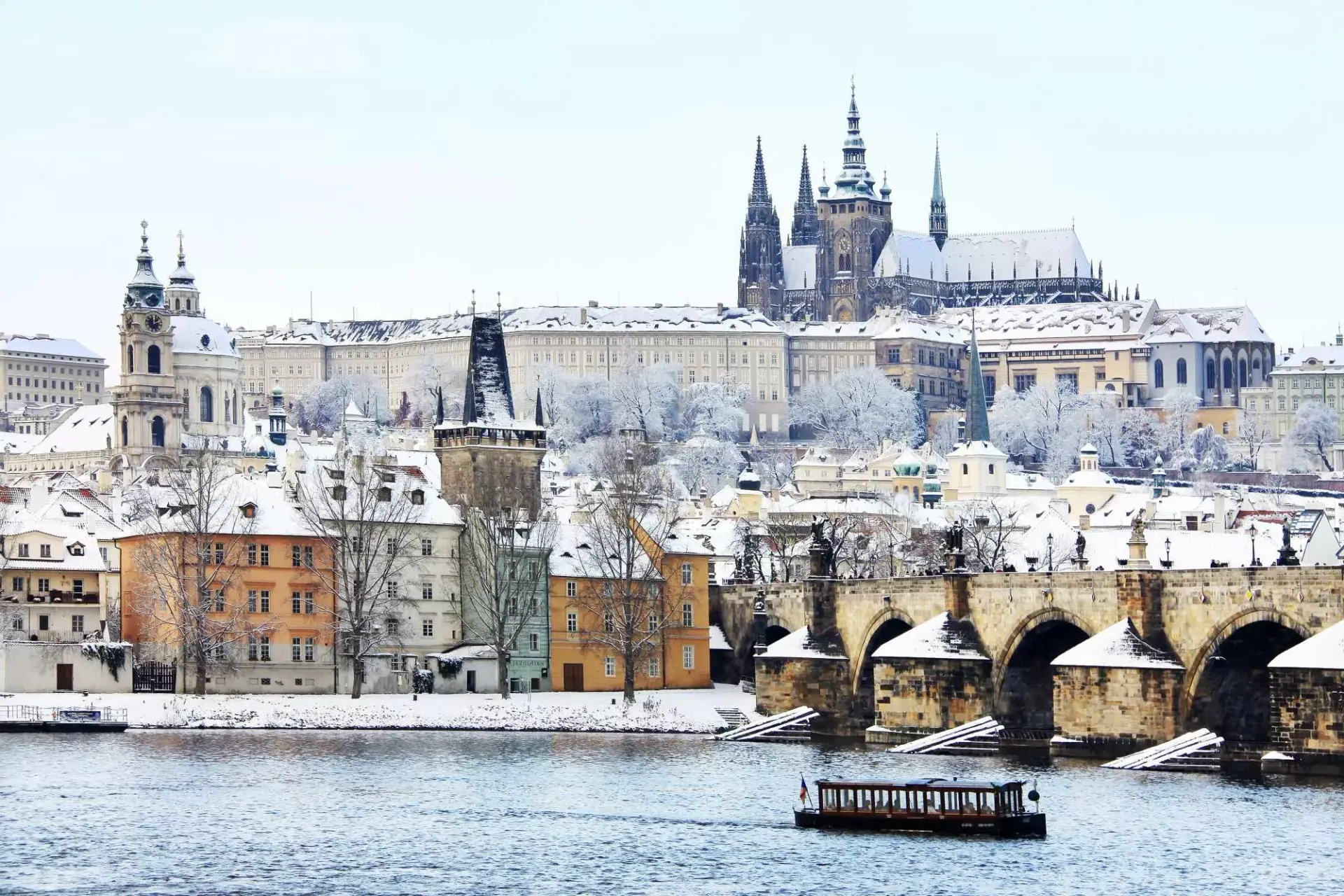
Prague accommodation near Charles Bridge
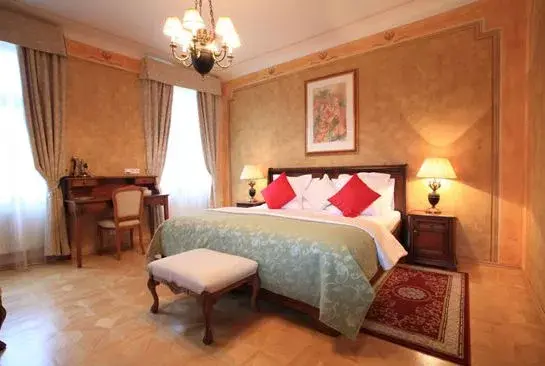
Praha Hotel U Jezulatka, from category 4 star hotels in Prague, is located near the hotel in the church of the Virgin Mary Victorious - a destination for many pilger images. Hotel U Jezulatka offers romantic accomodation in Prague in 6 luxury rooms.
Hotel U Jezulátka is 150 m from Charles Bridge.
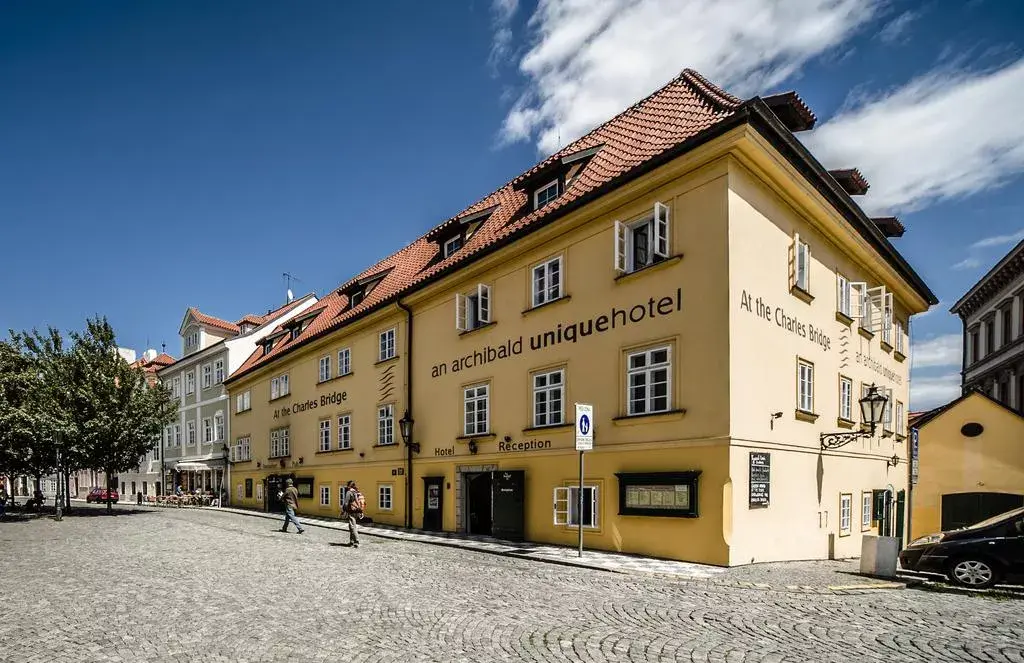
Hotel Archibald At the Charles Bridge, from category 4 star Prague hotels, is situated in Lesser Town, historical center of Prague. You will stay just a few steps from the famous Charles Bridge, part of Royal Route - path along which medieval Bohemian monarchs paraded on their way to being crowned. Hotel was completely renovated after the August floods in 2002 and was reopenned in May 2003.
Hotel Archibald At the Charles Bridge is 180 m from Charles Bridge.
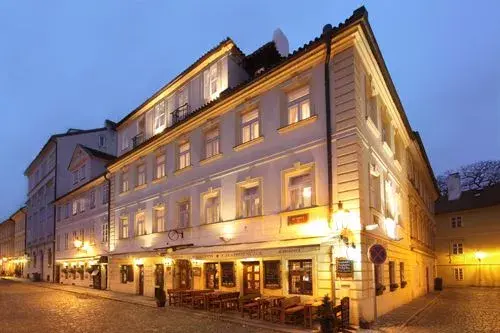
Hotel At the Golden Scissors Praha, from category 4 star Prague hotels, is located in an exceptionally quiet area, only a few metres from the Charles Bridge. This is a short distance from the most attractive places of interest, right in the heart of ancient Lesser Town on Kampa Island. The island is bordered by The Vltava River, and contributes to the charming scenery of the Lesser Town.
Hotel U Zlatych Nuzek is 190 m from Charles Bridge.
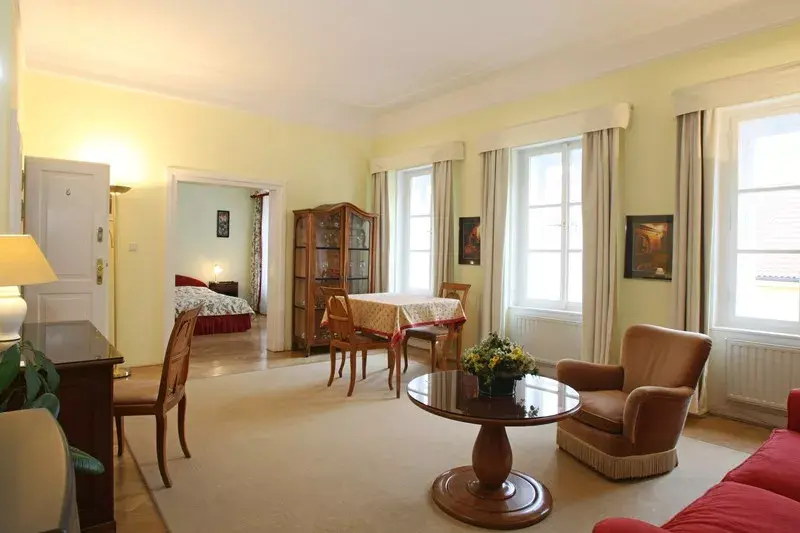
Hotel Cafe Dvorak, from category 4 star Prague hotels, is located in a peaceful, pedestrian square in the shadow of Charles Bridge. The rooms are stylish and renovated at 2001.
Residence Dvorak is 200 m from Charles Bridge.
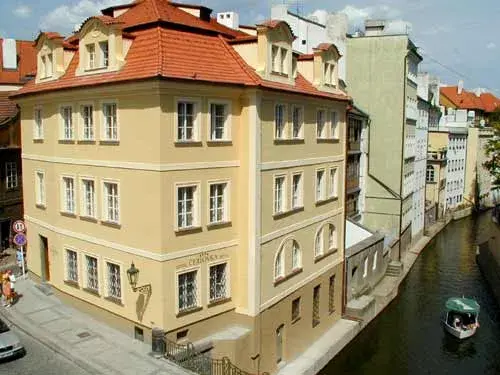
Hotel Čertovka Praha, from cateogry 4 star Prague hotels, is located in Lesser Town (Praha Mala Strana), very close to the Charles Bridge (Karluv most). The rooms have a view of the bridge, panorama of Hradčany, the Prague Castle (Prazsky hrad), and the Bridge Tower. Hotel is situated 5 minutes walk from Underground "A" station "Malostranska", 5 minutes from tram station "Malostranske namesti" and 15 minutes form "Staromestska" station.
Hotel Certovka is 210 m from Charles Bridge.
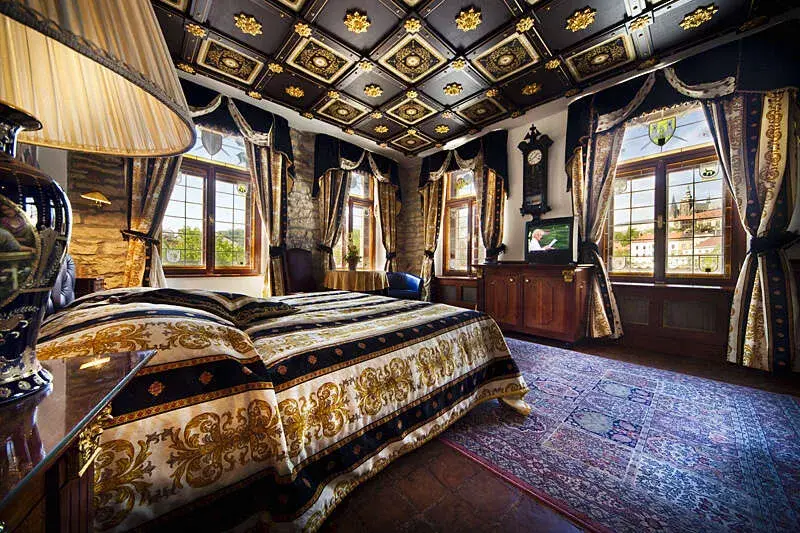
Hotel U Páva Praha, from category 4 star hotels in Prague, is located in the romantic old part of Prague on Kampa Island. It is only a few steps from the famous Charles bridge and within a walking distance from the Prague Castle and othe city sights. Hotel is also very close to the Kings Road and the underground and trams stops are just round the corner.
Hotel U Pava is 230 m from Charles Bridge.
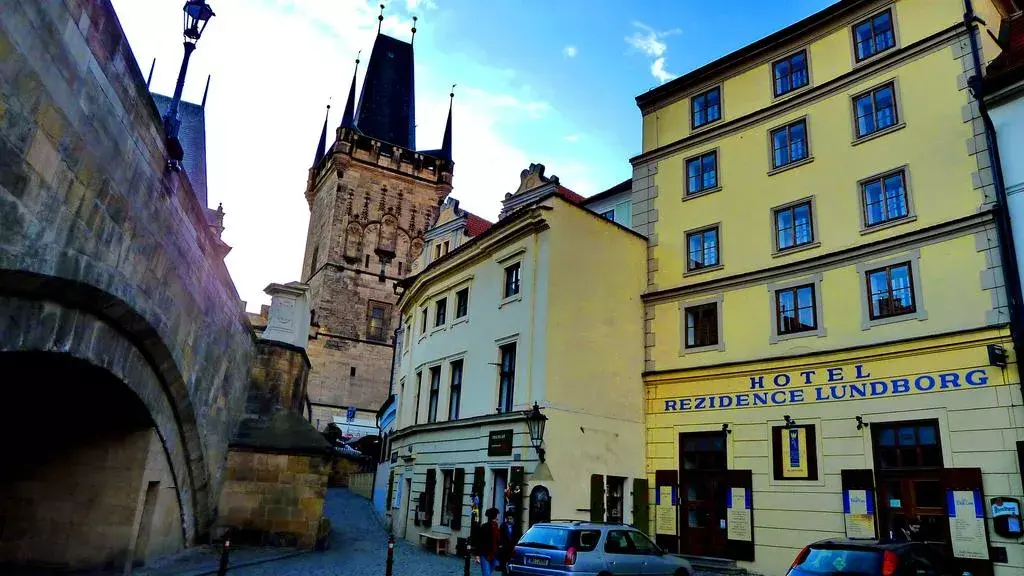
Hotel Rezidence Lundborg Praha, from category 5 star Prague hotels is situated in the heart of Prague, right next to the Charles Bridge. Our small renaissance hotel is in a 700-year-old building. You will find many cosy restaurants, genuine Czech pubs as well as interesting boutiques and galleries along your way. Many other historical sights, such as the Prague Castle, the St.Vitus cathedral, the Old Town Square, are within a walking distance. Hotel Lundborg offers Prague accommodation in 13 apartments and suits.
Hotel Residence Lundborg is 240 m from Charles Bridge.

Hotel Kampa Garden Praha, from category 3 star Prague hotels, is situated right in the heart of Prague on Kampa Island, which has been used by the people of Prague for many centuries for relaxation and for taking pleasant walks along the banks of the Vltava. In the immediate vicinity of the hotel you can find such exquisite historical buildings and construction works in Prague as Sovovy Mlýny, the Werich Villa, the Čertovka blind channel or the Charles Bridge.
Kampa Garden Superior is 250 m from Charles Bridge.
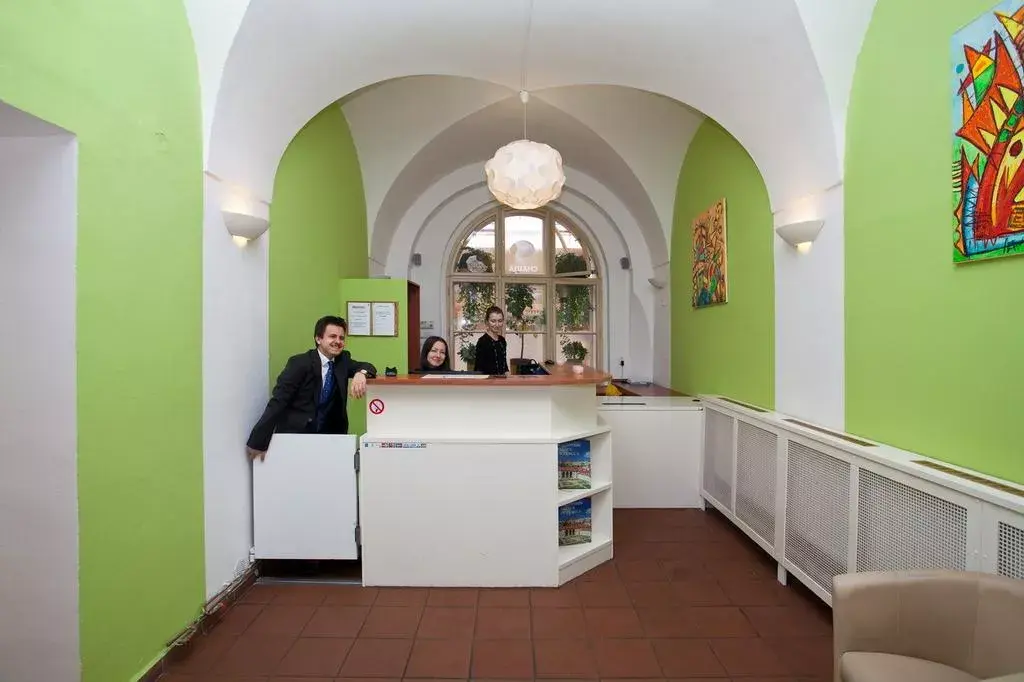
Mango Hostel, Prague 1, Malá Strana, offers a fully equipped kitchen for guests to boiling food. Free linen, laundry, computer, cable TV, private bar, excellent location, attractive prices and a comfortable bed - all this gives Mango Hostel. Free wifi connection.
Hostel Mango is 260 m from Charles Bridge.
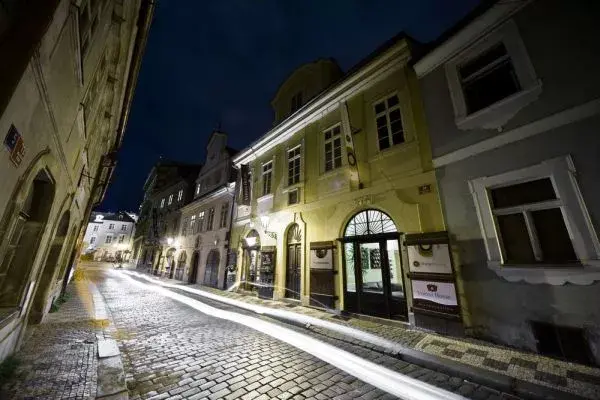
The wine Prague Hotel Pinot represents an intimate family hotel, a combination of romantic settings and modern services with welcoming accommodation in Prague. The building from the beginning of the 18th century was responsively restored in the first half of 2005. The hotel is located in the Lesser Town - right in the heart of the historical centre of Prague, only a few meters away from Charles Bridge.
Hotel Pinot is 260 m from Charles Bridge.
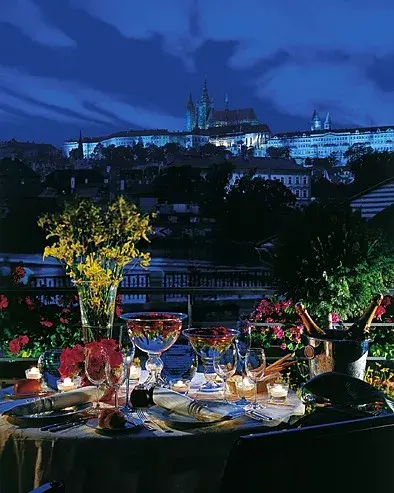
Hotel Four Seasons Praha, from category 5 star Prague hotels, is situated at the edge of the Vltava River, steps from the Charles Bridge – discover a remarkably quiet enclave, immersed in vibrant Old Town. Interweaving centuries of architecture with tomorrow’s technology, Four Seasons connects you to the most authentic Prague – granting rare insider access and one-of-a-kind cultural discoveries.
Four Seasons Hotel is 270 m from Charles Bridge.
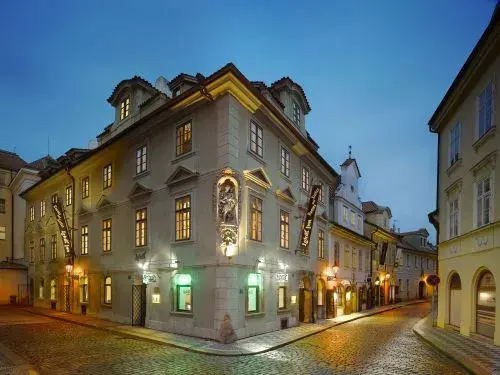
Romantic Hotel Lokal Inn, from category 4 star hotels in Prague, is situated close proximity of the Charles bridge and the setting – the district known as Lesser Town – conspire to create the illusion of history drawing nearer. To lodge at the Lokál Inn is to experience a striking combination of contemporary comfort and superb Czech cuisine.
EA Residence u Bíle kuželky is 270 m from Charles Bridge.
Page 1 of 49
Showing 1 - 12 / 579
Charles Bridge
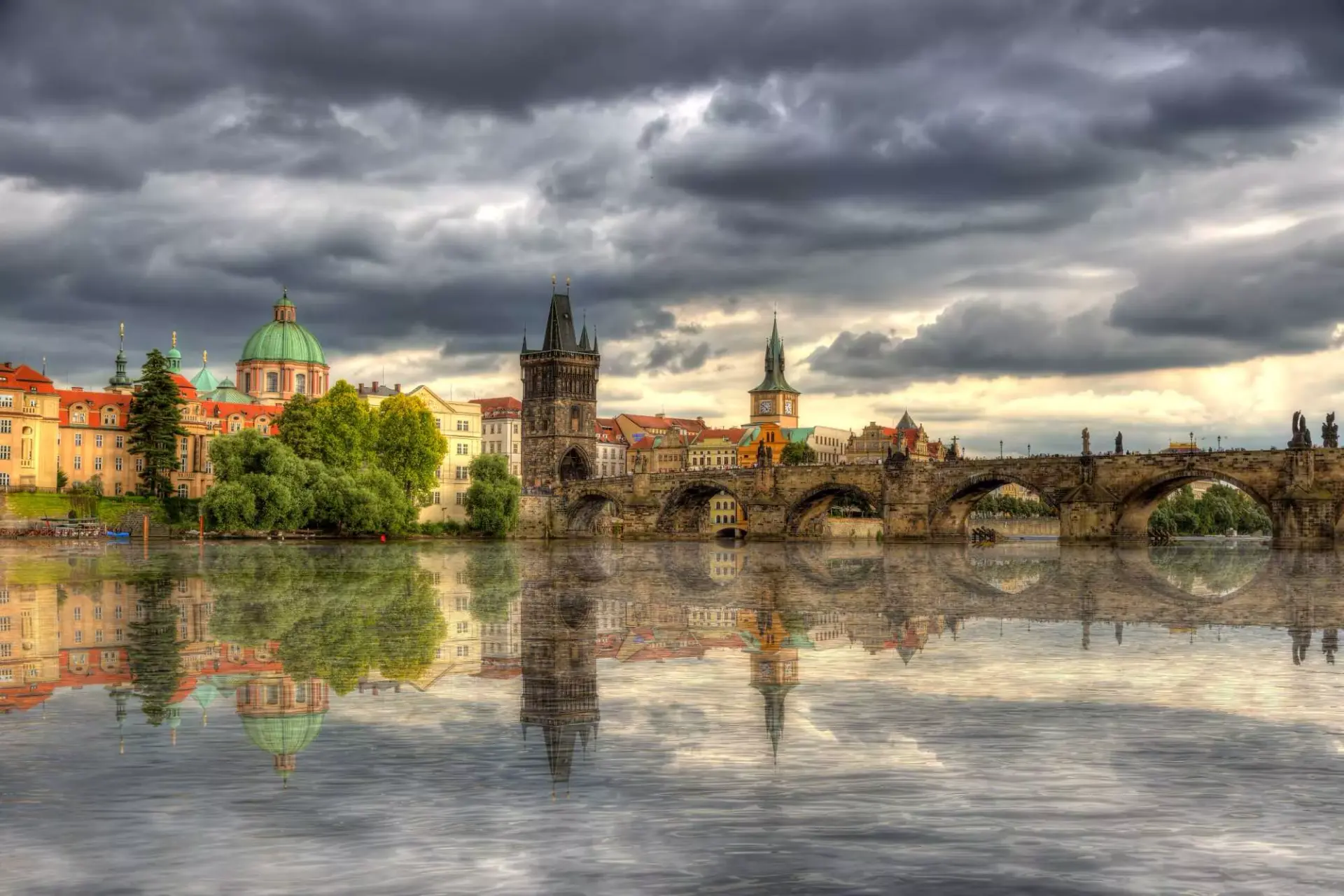
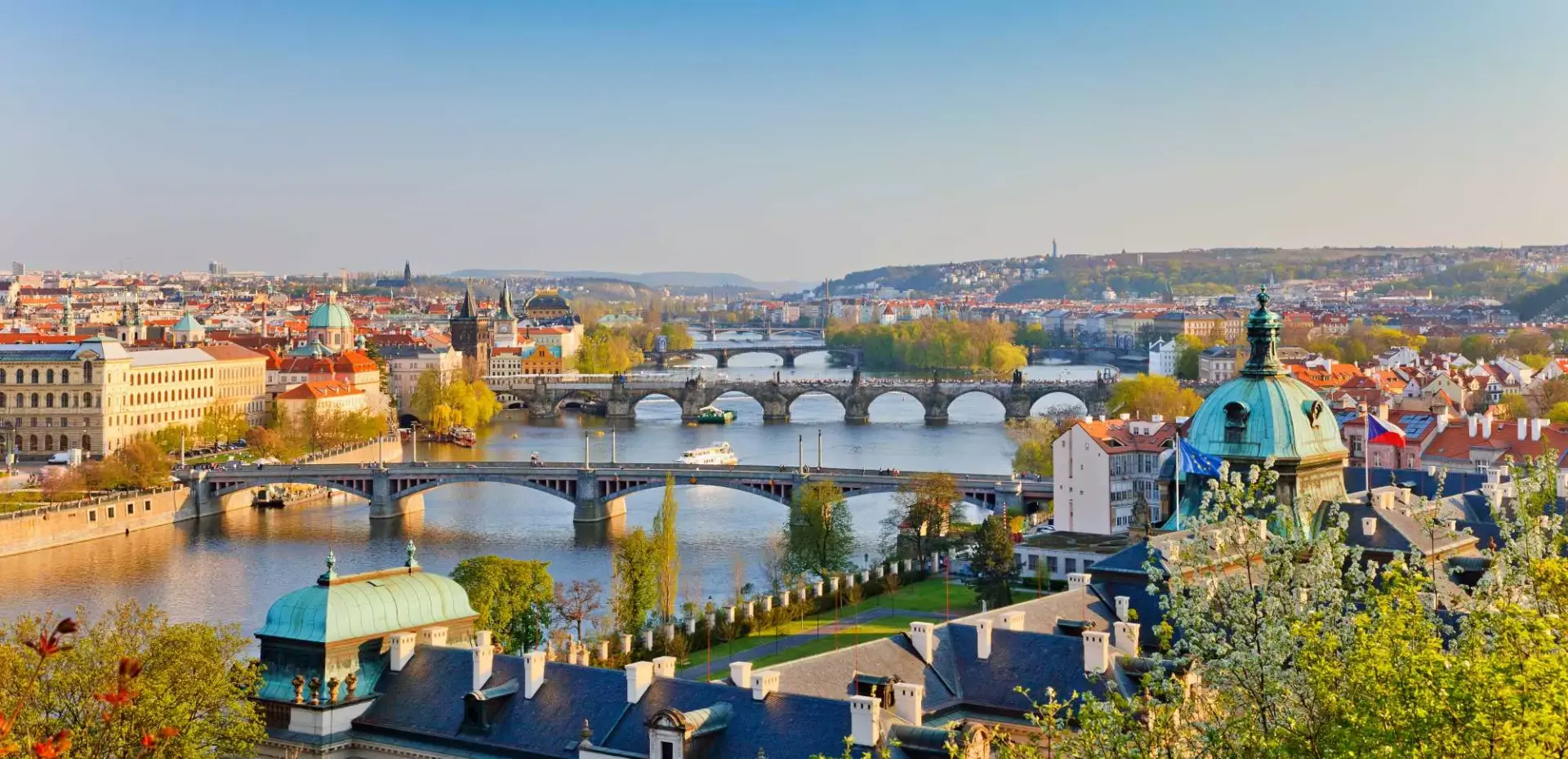
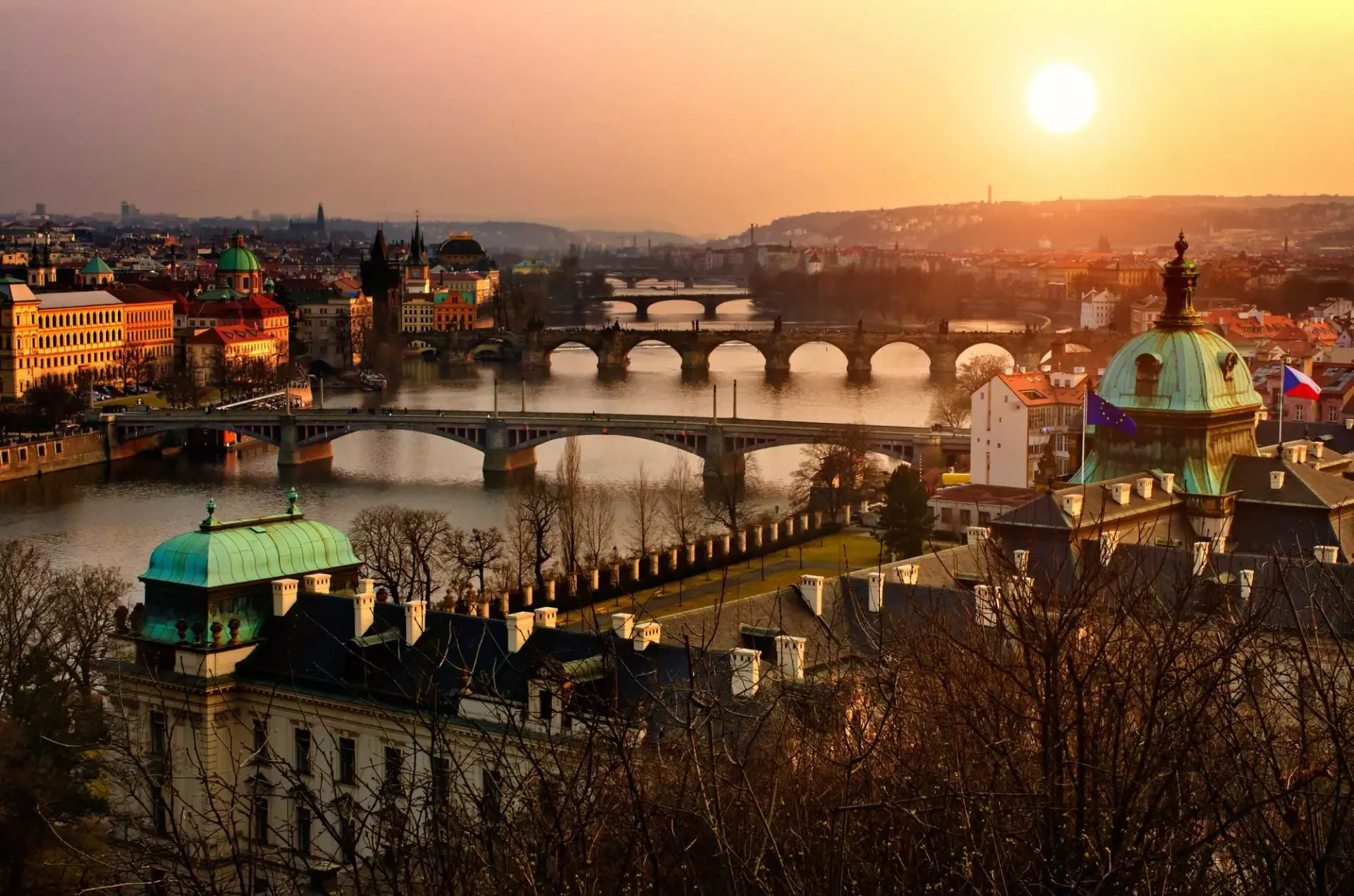
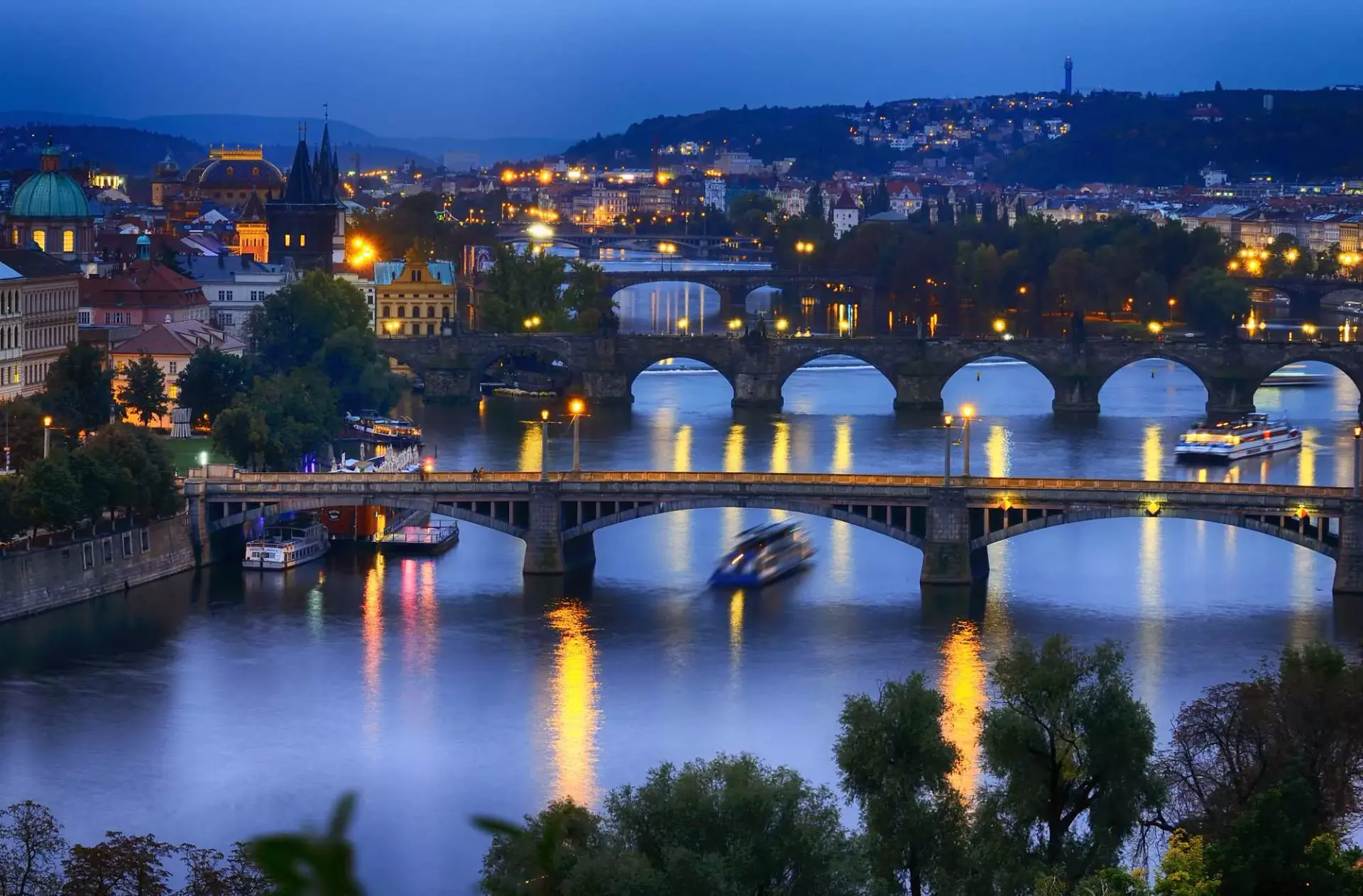
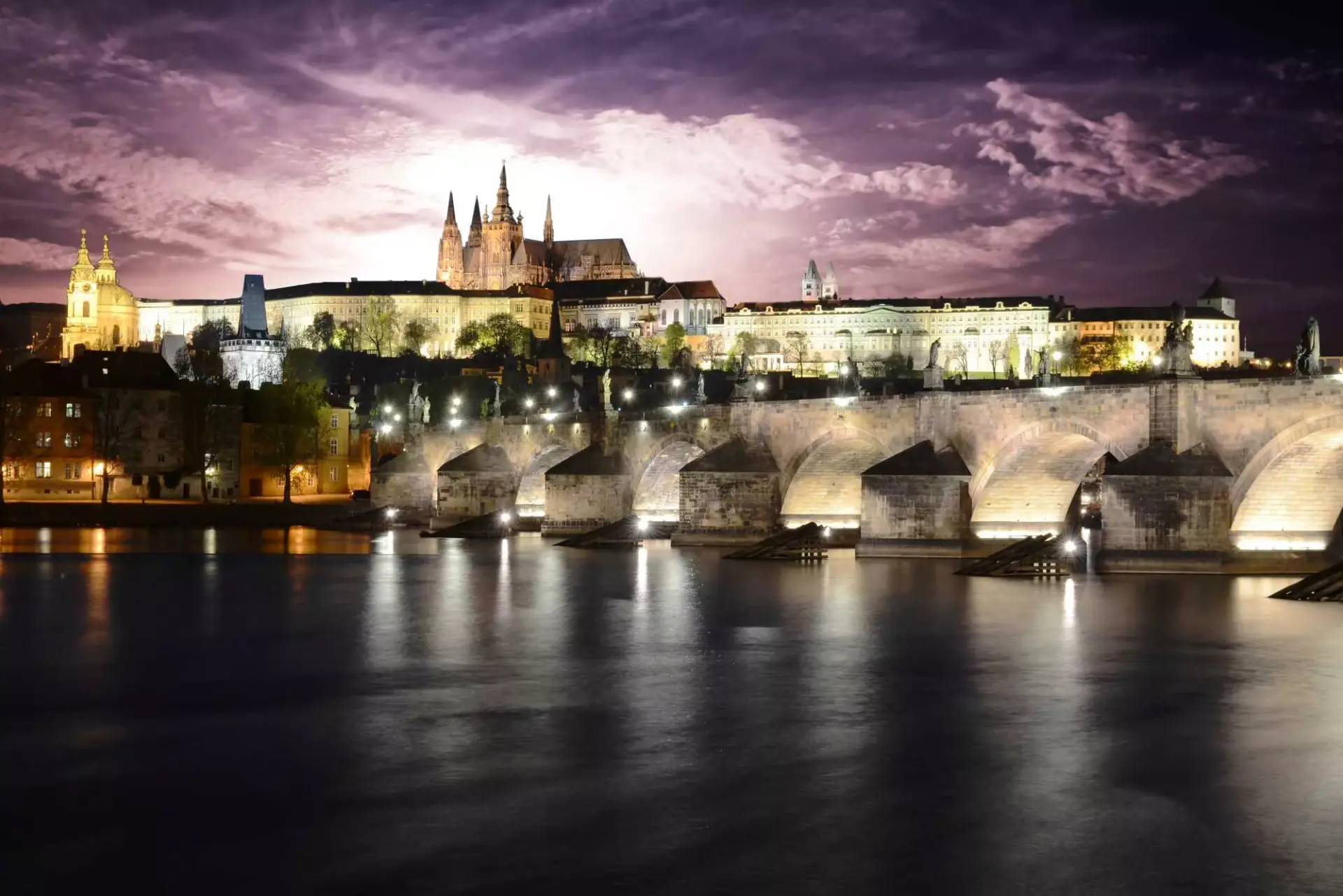
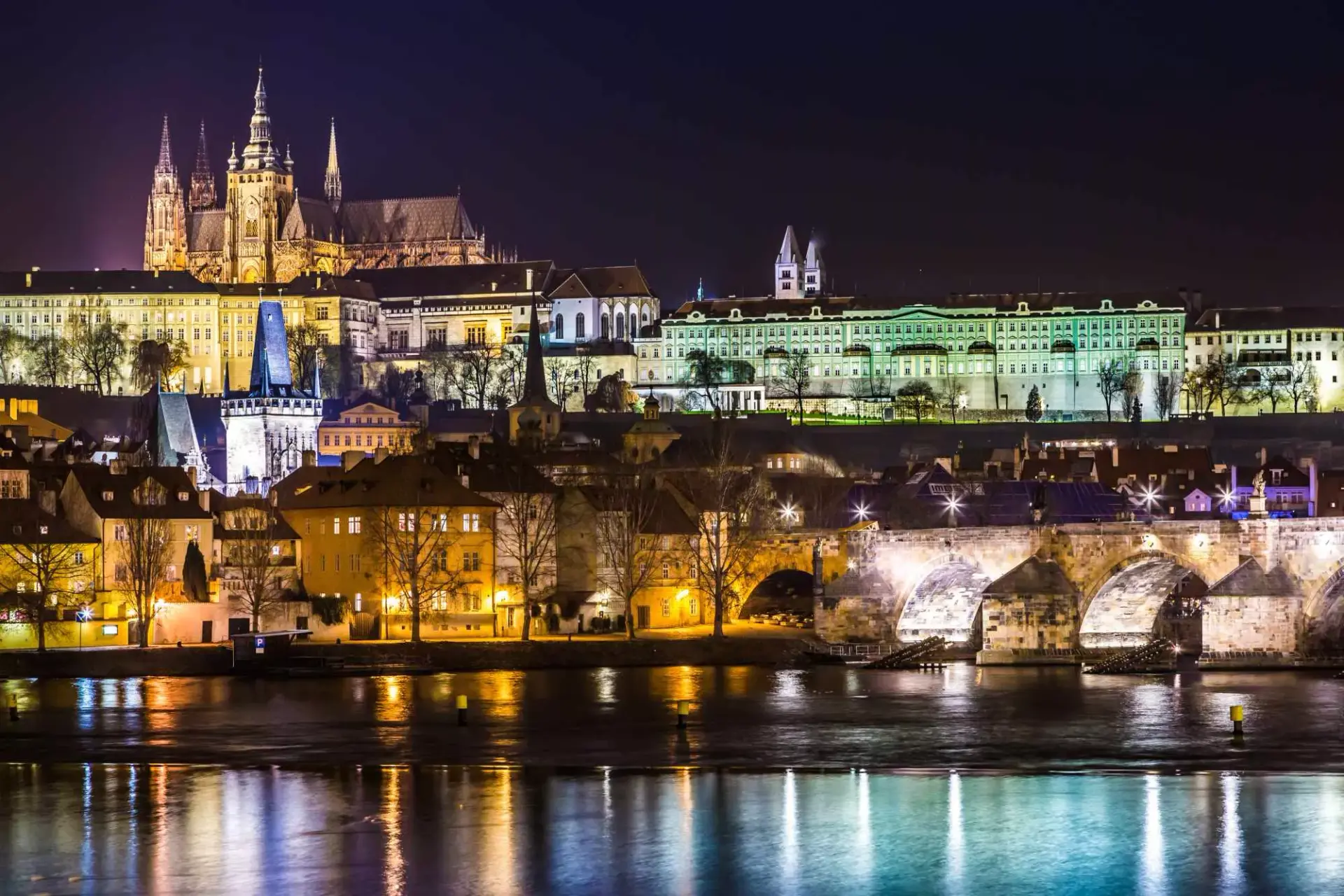
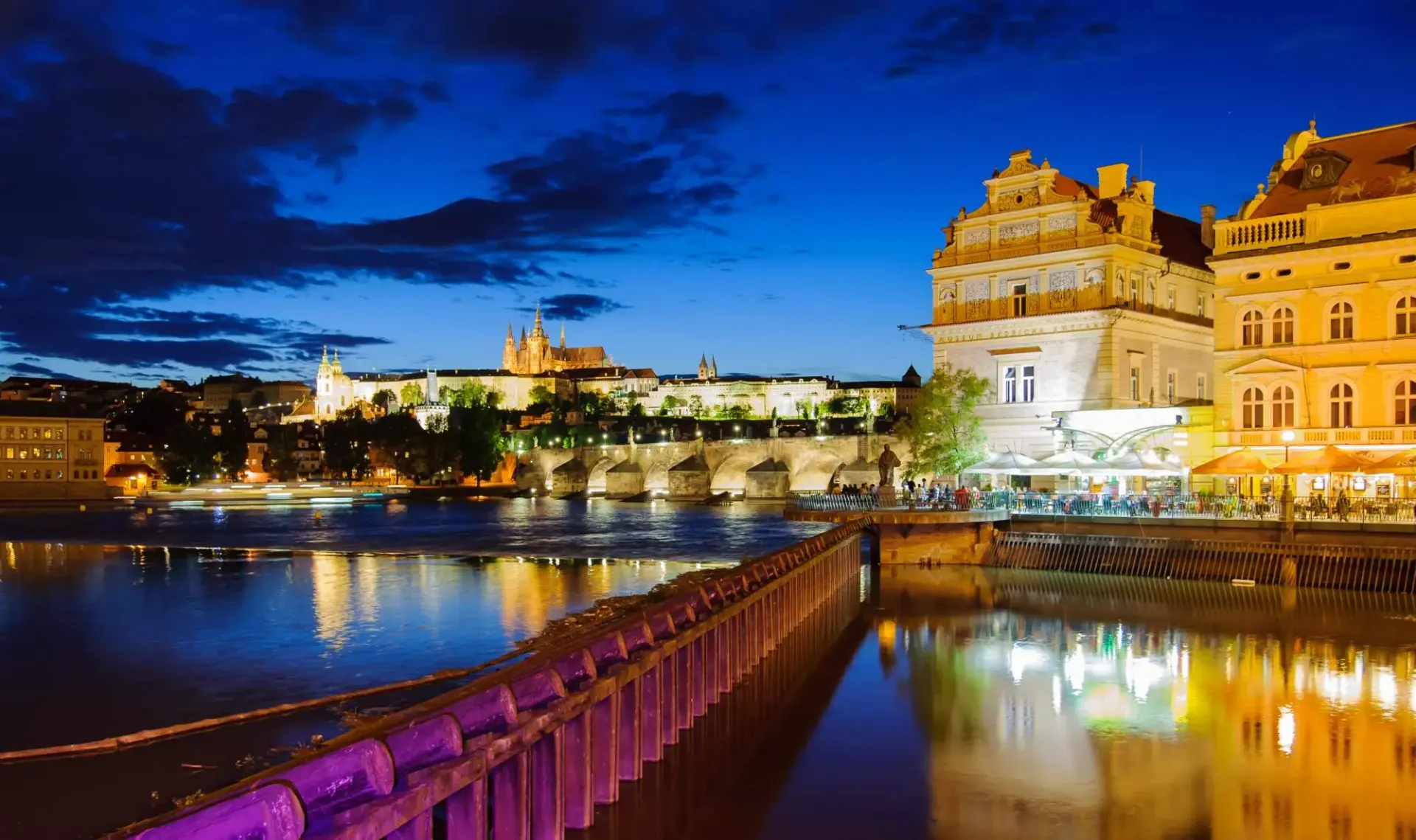
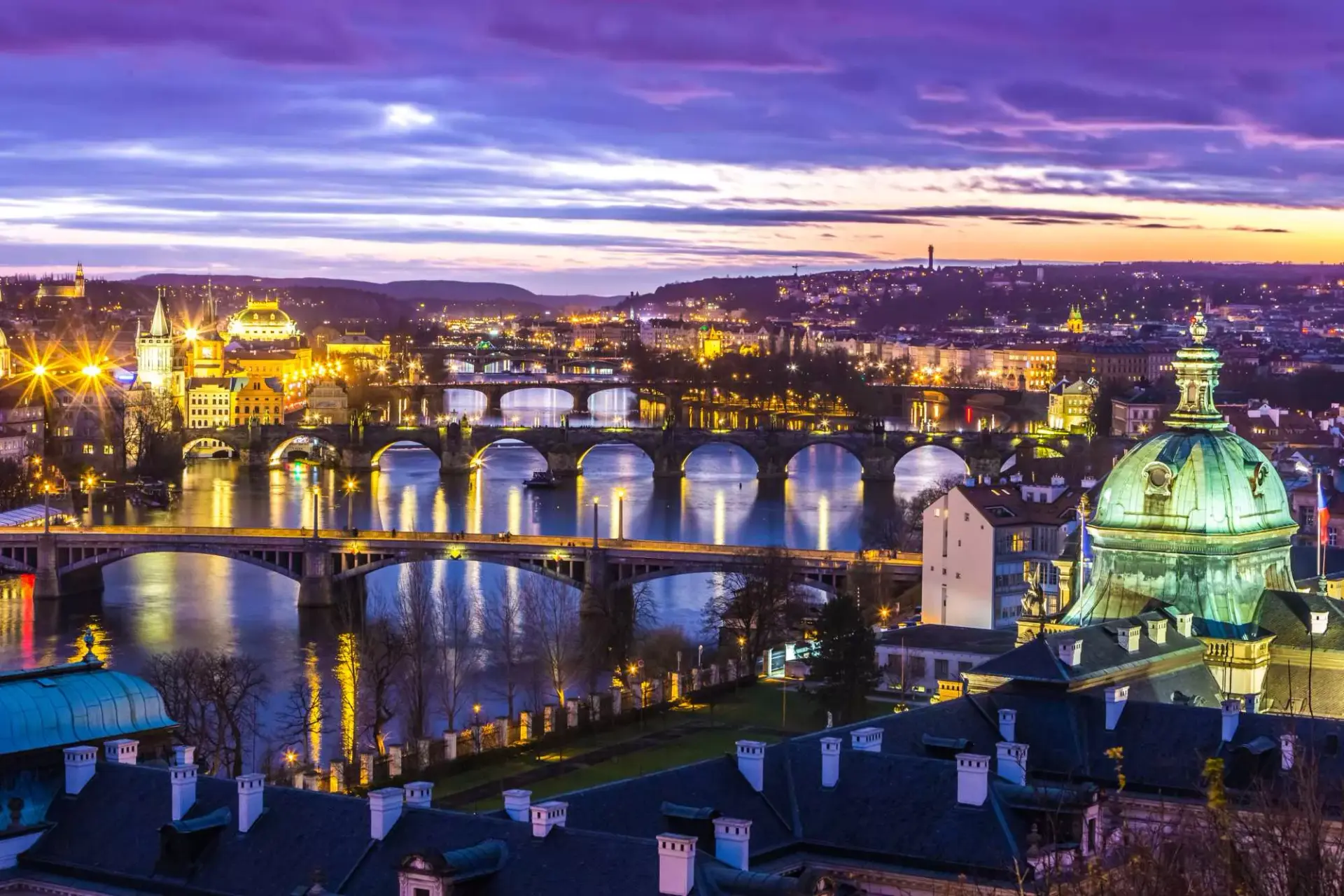
The Charles Bridge (Czech: Karlův most listen (help·info)) is a famous historic bridge that crosses the Vltava river in Prague, Czech Republic. Its construction started in 1357 under the auspices of King Charles IV, and finished in the beginning of the 15th century. The bridge replaced the old Judith Bridge built 1158–1172 that had been badly damaged by a flood in 1342. This new bridge was originally called the Stone Bridge (Kamenný most) or the Prague Bridge (Pražský most) but has been the "Charles Bridge" since 1870. As the only means of crossing the river Vltava (Moldau) until 1841, the Charles Bridge was the most important connection between Prague Castle and the city's Old Town and adjacent areas. This "solid-land" connection made Prague important as a trade route between Eastern and Western Europe.
The Charles Bridge (Czech: Karlův most listen (help·info)) is a famous historic bridge that crosses the Vltava river in Prague, Czech Republic. Its construction started in 1357 under the auspices of King Charles IV, and finished in the beginning of the 15th century. The bridge replaced the old Judith Bridge built 1158–1172 that had been badly damaged by a flood in 1342. This new bridge was originally called the Stone Bridge (Kamenný most) or the Prague Bridge (Pražský most) but has been the "Charles Bridge" since 1870. As the only means of crossing the river Vltava (Moldau) until 1841, the Charles Bridge was the most important connection between Prague Castle and the city's Old Town and adjacent areas. This "solid-land" connection made Prague important as a trade route between Eastern and Western Europe.
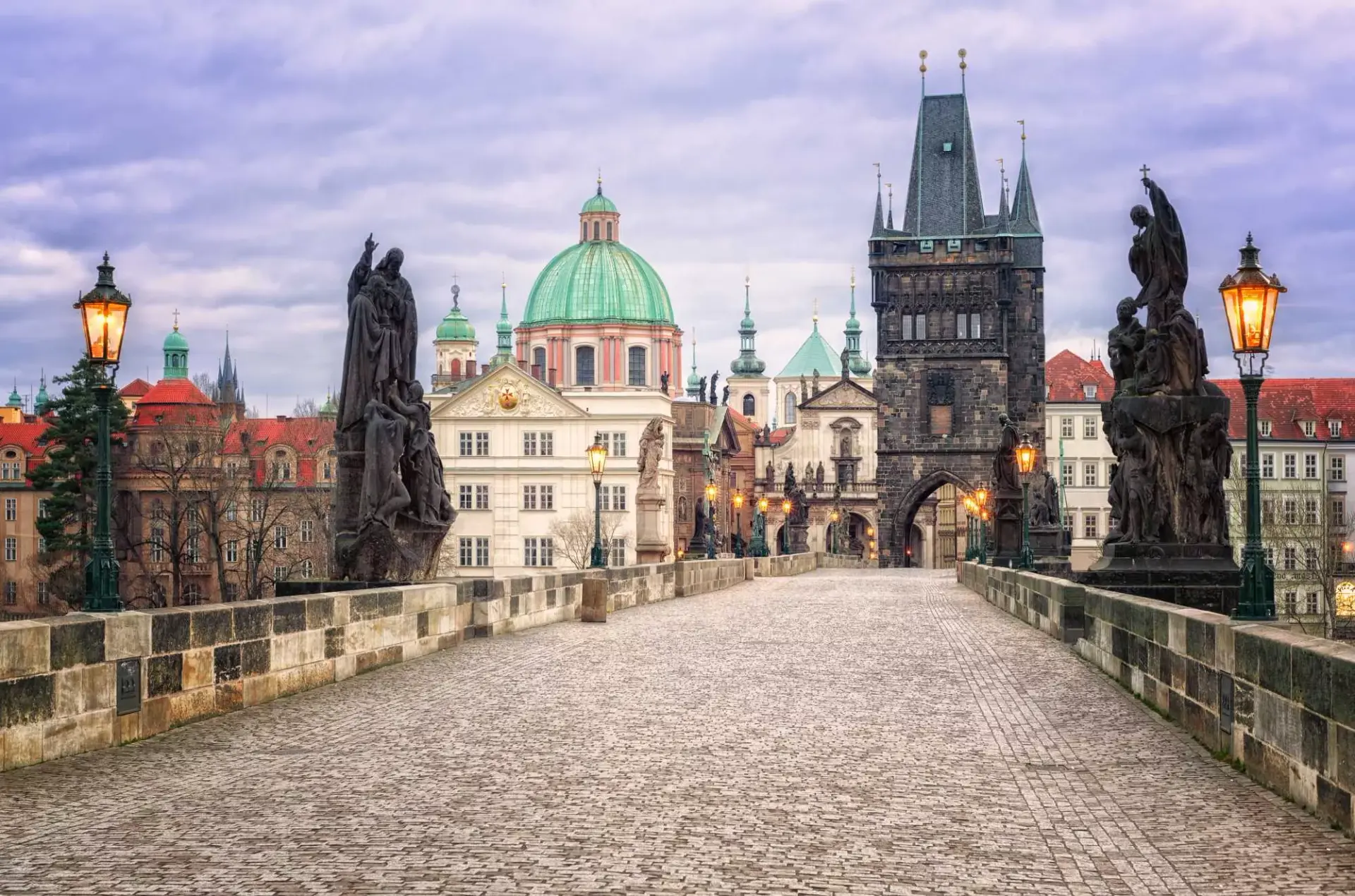
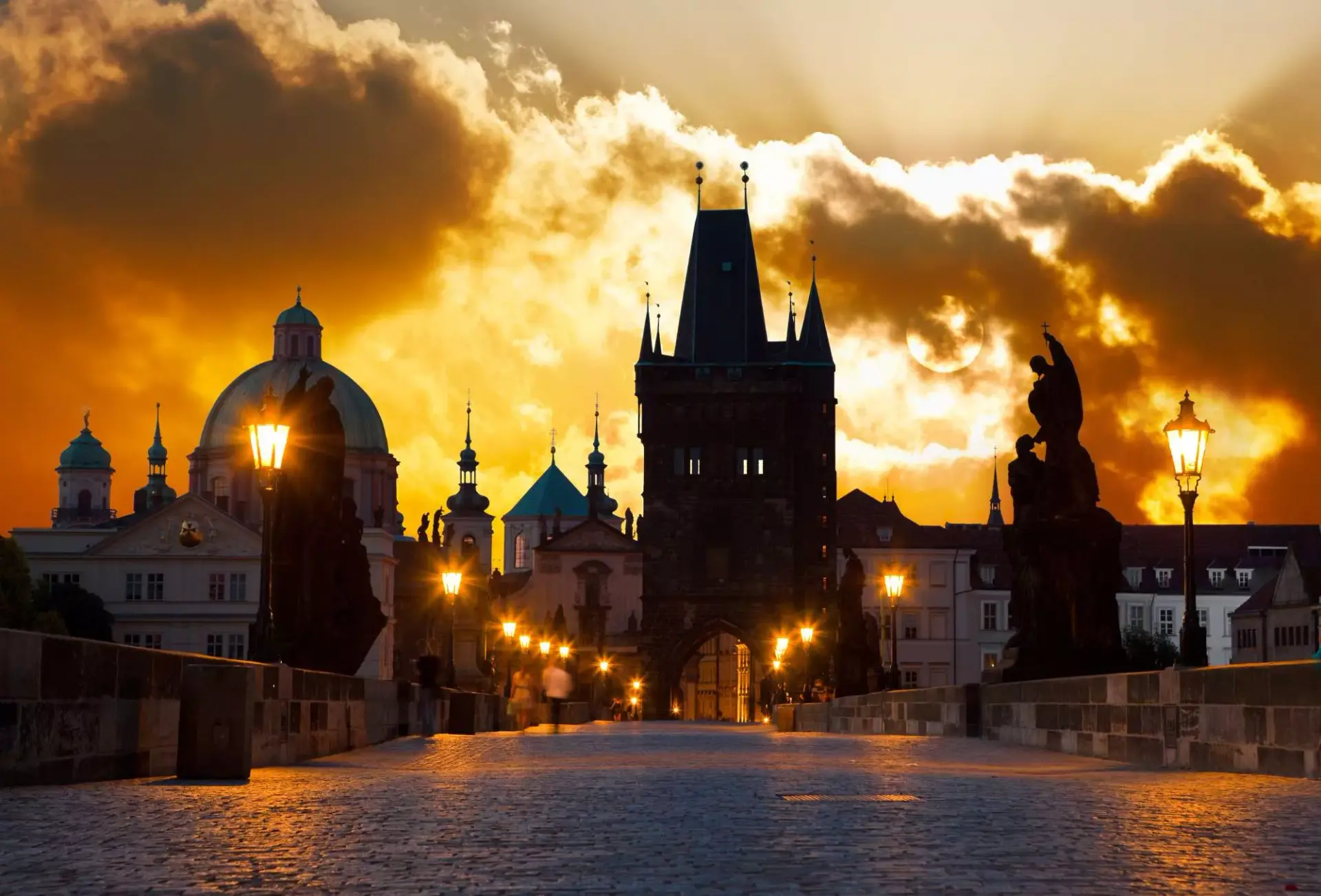
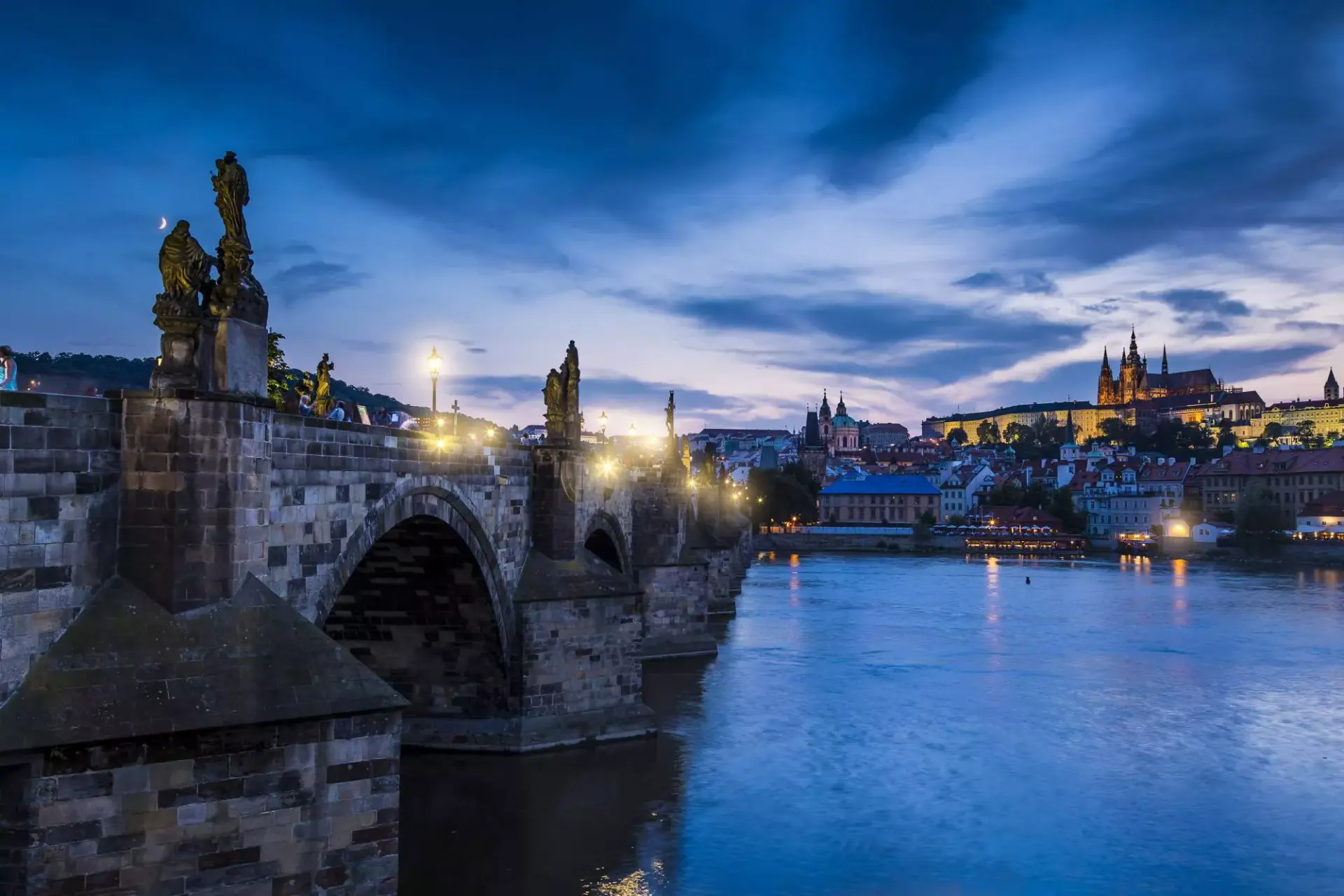
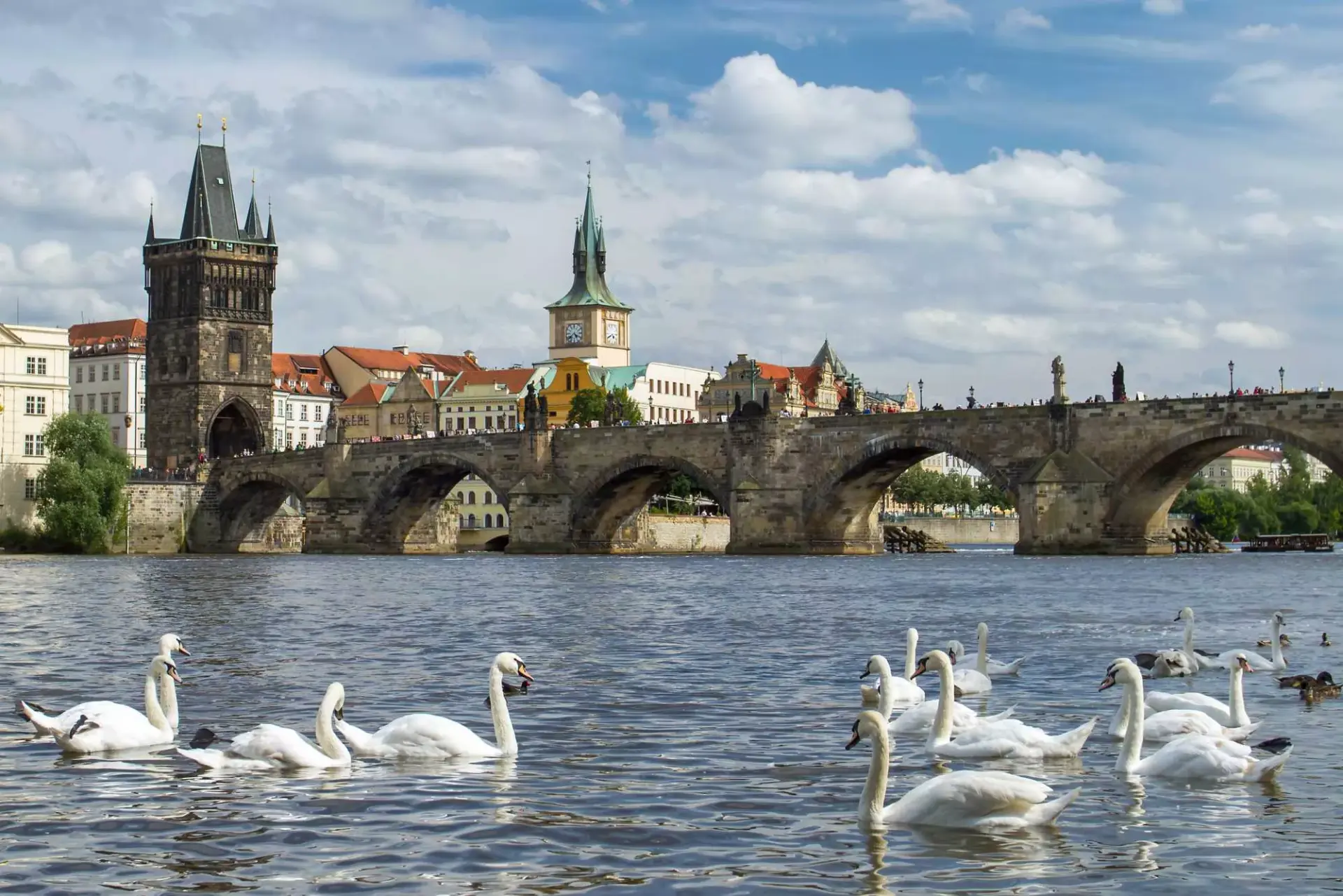
The bridge is 621 m long and nearly 10 m wide, resting on 16 arches shielded by ice guards. It is protected by three bridge towers, two of them on the Lesser Quarter side and the third one on the Old Town side. The Old Town bridge tower is often considered to be one of the most astonishing civil gothic-style buildings in the world. The bridge is decorated by a continuous alley of 30 statues and statuaries, most of them baroque-style, originally erected around 1700 but now all replaced by replicas.
History
Through the 19th century
Throughout its history, the Charles Bridge suffered several disasters and witnessed many historic events. Czech legend has it that construction began on Charles Bridge at 5:31am on 9 July 1357 with the first stone being laid by Charles IV himself. This exact time was very important to the Holy Roman Emperor because he was a strong believer of numerology and this specific time, which formed a numerical bridge (1357 9, 7 5:31), would imbue Charle's Bridge with additional strength. Given the bridge's long life perhaps the Emperor's belief holds some weight, though the bridge has seen its fair share of tragedy. A flood in 1432 damaged three pillars. In 1496 the third arch (counting from the Old Town side) broke down after one of the pillars lowered, being undermined by the water (repairs were finished in 1503). A year after the Battle of White Mountain, when the 27 leaders of the anti-Habsburg revolt were executed on 21 June 1621, the Old Town bridge tower served as a deterrent display of the severed heads of the victims to stop Czechs from further resistance. During the end of the Thirty Years' War in 1648, the Swedes occupied the west bank of the Vltava, and as they tried to advance into the Old Town the heaviest fighting took place right on the bridge. During the fighting, they severely damaged one side of the Old Town bridge tower (the side facing the river) and the remnants of almost all gothic decorations had to be removed from it afterward. During the late 17th century and early 18th century the bridge gained its typical appearance when an alley of baroque statues was installed on the pillars. During a great flood in 1784, five pillars were severely damaged and although the arches did not break down, the traffic on the bridge had to be greatly restricted for some time.
The original stairway to Kampa Island was replaced by a new one in 1844. The next year, another great flood threatened the bridge, but the bridge escaped major damage. In 1848, during the revolutionary days, the bridge escaped unharmed from the cannonade, but some of the statues were damaged. In 1866, pseudo-gothic gas lights were erected on the balustrade; they were later replaced with electric lighting. In the 1870s, the first regular public-transport (omnibus) line went over the bridge (officially called "Charles Bridge" after 1870), later replaced by a horse tram. The bridge towers underwent a thorough reconstruction between 1874 and 1883.
On 2–5 September 1890, another disastrous flood struck Prague and severely damaged the Charles Bridge. Thousands of rafts, logs and other floating materials that escaped from places upstream gradually formed a huge barrier leaning against the bridge. Three arches were torn down by the great pressure and two pillars collapsed from being undermined by the water, while others were partly damaged. With the fifth pillar, two statues – St. Ignatius of Loyola and St. Xavier, both by Ferdinand Brokoff – also fell into the river. The former statue was replaced by a statuary of Saints Cyril and Methodius by Karel Dvořák; the latter was replaced by a replica of the original. Repair works lasted for two years (the bridge was reopened on 19 November 1892) and cost 665,000 crowns.
20th century to present
In the beginning of the 20th century, the Charles Bridge saw a steep rise of heavy traffic. The last day of the horse line on the bridge was 15 May 1905, when it was replaced with an electric tram and later, in 1908, with buses. At the end of World War II, a barricade was built in the Old Town bridge tower gateway. A capital repair of the bridge took place between 1965 and 1978, based on a collaboration among various scientific and cultural institutes. The stability of the pillars was reassured, all broken stone blocks were replaced, and the asphalt top was removed. All vehicular traffic has been excluded from the Charles Bridge since then, making it accessible by pedestrians only. The repair cost 50 million crowns.
During the 1990s, some people started criticizing the previous reconstruction of the bridge and proposing further work. As of the beginning of the new millennium, most of the experts appeared to agree that the previous reconstruction had not been flawless but disputed the need for further interference with the bridge. However, after the disastrous floods of 2002 (which themselves caused only minor harm to the bridge), support for an overall bridge reconstruction grew. It was decided that repair and stabilization of the two pillars (numbers 8 and 9) on the Malá Strana side of the bridge would be done. These are the only river pillars that were not repaired after the 1890 floods. The reconstruction was a gradual process that closed off parts of the bridge without closing the span entirely. Performed from 2008 to 2010, the work included bolstering the pillars and building a new hydroisolation system protecting the bridge. It also encompassed the replacement of many of the stones in the bridge walls, a matter which was controversial due to a heavy-handed approach adopted by the restoration team. The result has been criticised by conservation professionals all over Europe (see photos on external links). Dozens of new replacement "stones" do not match the historical ones they are next to.
Statues on the bridge
The avenue of 30 mostly baroque statues and statuaries situated on the balustrade forms a unique connection of artistic styles with the underlying gothic bridge. Most sculptures were erected between 1683 and 1714. They depict various saints and patron saints venerated at that time. The most prominent Bohemian sculptors of the time took part in decorating the bridge, such as Matthias Braun, Jan Brokoff, and his sons Michael Joseph and Ferdinand Maxmilian.
Among the most notable sculptures, one can find the statuaries of St. Luthgard, the Holy Crucifix and Calvary, and St. John of Nepomuk. Well known also is the statue of the knight Bruncvík, although it was erected some 200 years later and does not belong to the main avenue.
Beginning in 1965, all of the statues have been systematically replaced by replicas, and the originals have been exhibited in the lapidarium of the National Museum.