Prague accommodation near Dancing House
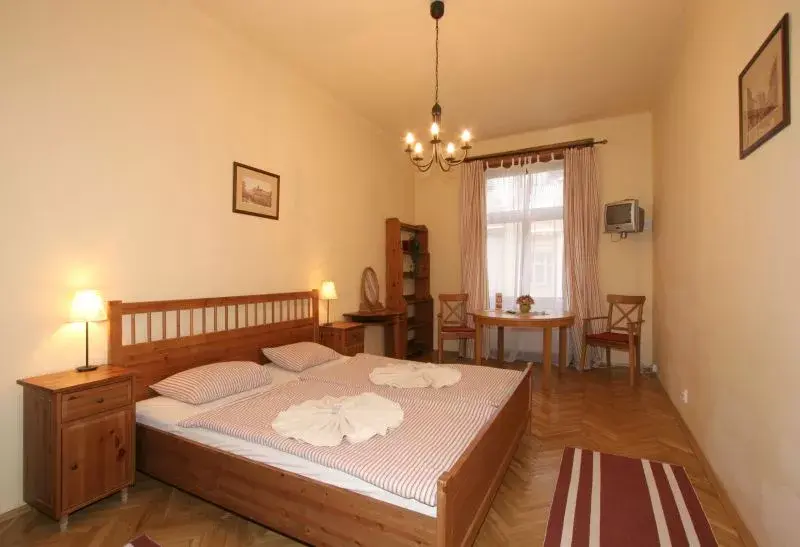
Romantic Praha hotel Merlin, from category 3 star pension in Prague, is located in the Prague centre on the banks of the Vltava River. Hotel Merlin is near the metro station "Karlovo Namesti" (yellow line B). The breath-taking historical quarters of the city are within walking distance of cozy hotel. The picturesque Charles Bridge, the National Theatre and the Old Town Square are a pleasant 10-minute walk, Prague Castle can be reached by tram (15 minutes), and the shopping and nightlife of Wenceslas Square is just two stops away on the metro.
MERLIN is 60 m from Dancing House.
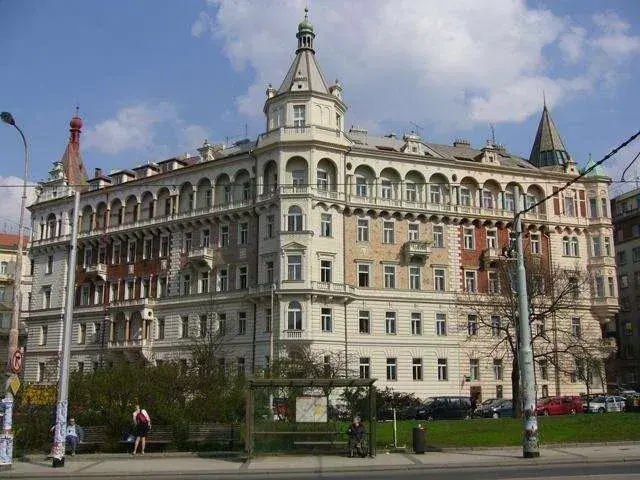
River View Prague apartments are the right place for Prague stay if you’re looking for a beautiful flat in Prague with cozy, expansive rooms, a great view of the river Vltava, and the best of both worlds of modern and classic architecture just meters from your doorstep. This tastefully decorated and fully furnished apartments in Prague, situated in a newly reconstructed building on the banks of the river Vltava will guarantee that every day of your Prague holiday will be a memorable one. For larger groups, there are four of these 2-bedroom apartments offered in the same building.
Apartments Prague River View is 110 m from Dancing House.
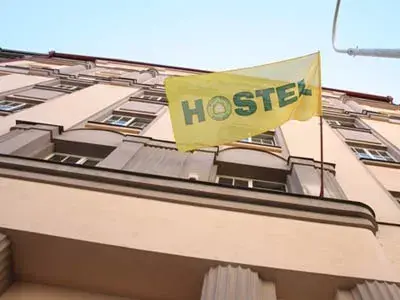
Dizzy Daisy Hostel, Praha 2, New Town offers single, double, triple and quadruple rooms with private bathroom. Guest kitchen, common room right by the reception, free internet access, travel info and the reception 24/7, we simply have it all.
Hostel Dizzy Daisy is 110 m from Dancing House.
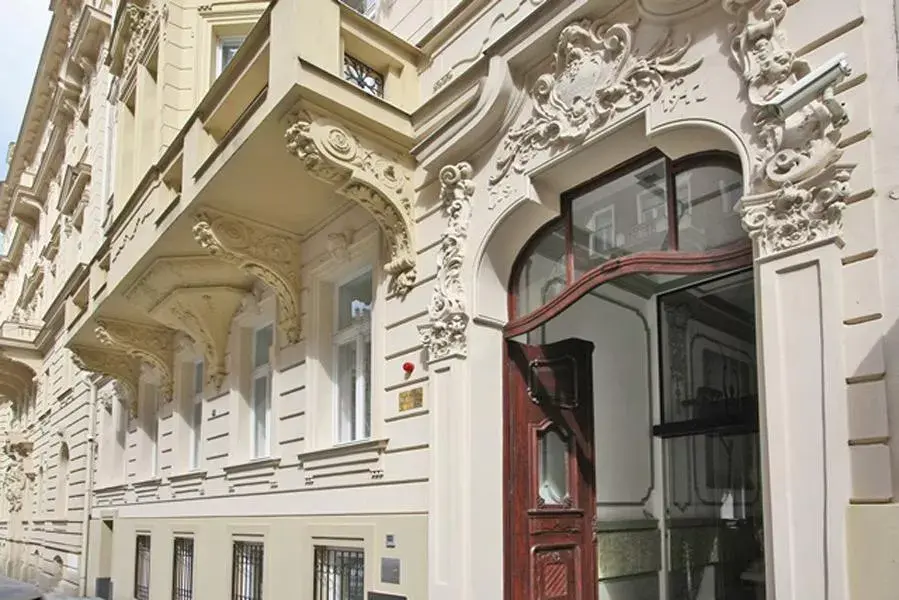
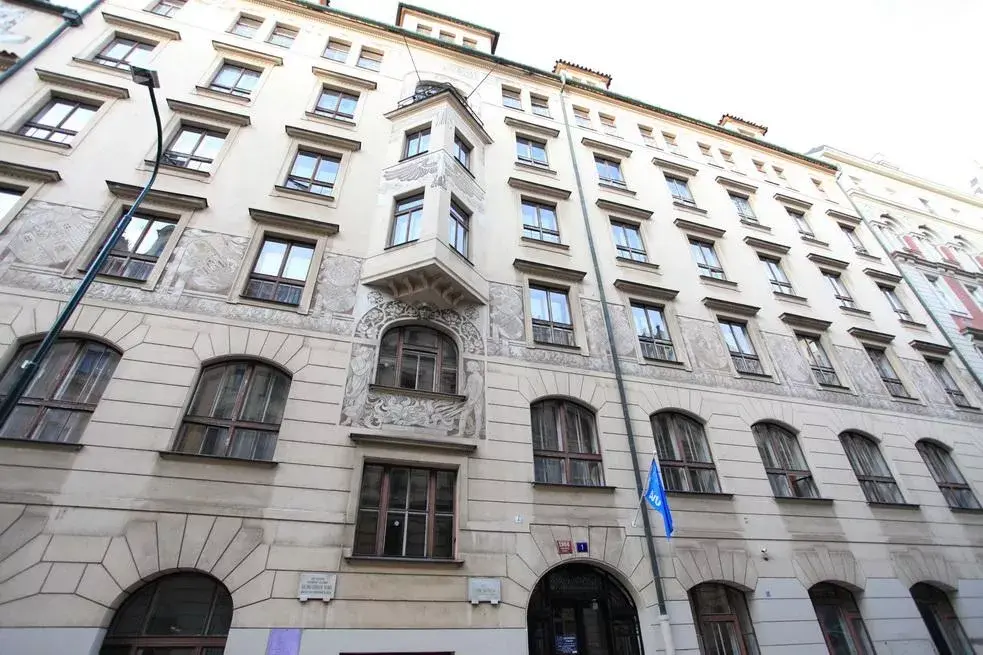
University College Hlávkova offers accommodation in the historical center of Prague. Peaceful surroundings and close views of Prague Castle. Suitable for families with children.
VŠ kolej Hlávkova is 160 m from Dancing House.
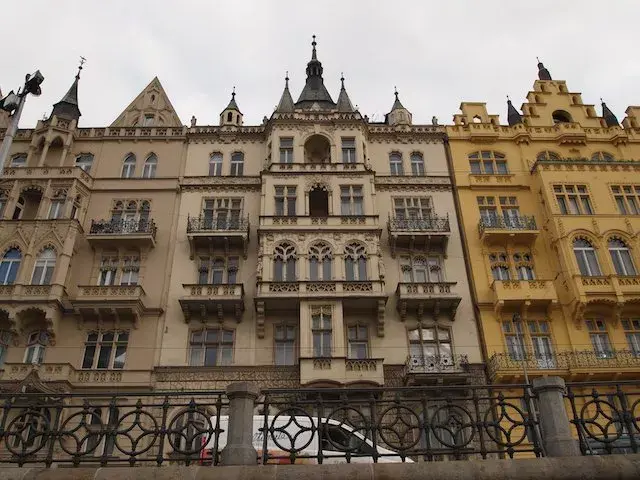
Praha Hostel Riverbank, from category hostels in Prague, is situated right in Prague center - on riverbank of Vltava, near Old Town. Only 5 min. walk from the Charles bridge (Karluv most). River Bank is offering spacious rooms and dorms for 4 and 6, with view to the river, Prague Castle (Prazsky hrad) and Lesser town (Mala Strana). If you want to enjoy the night life of Prague, you'll be satisfied in our hostel.
Hostel Riverbank is 170 m from Dancing House.
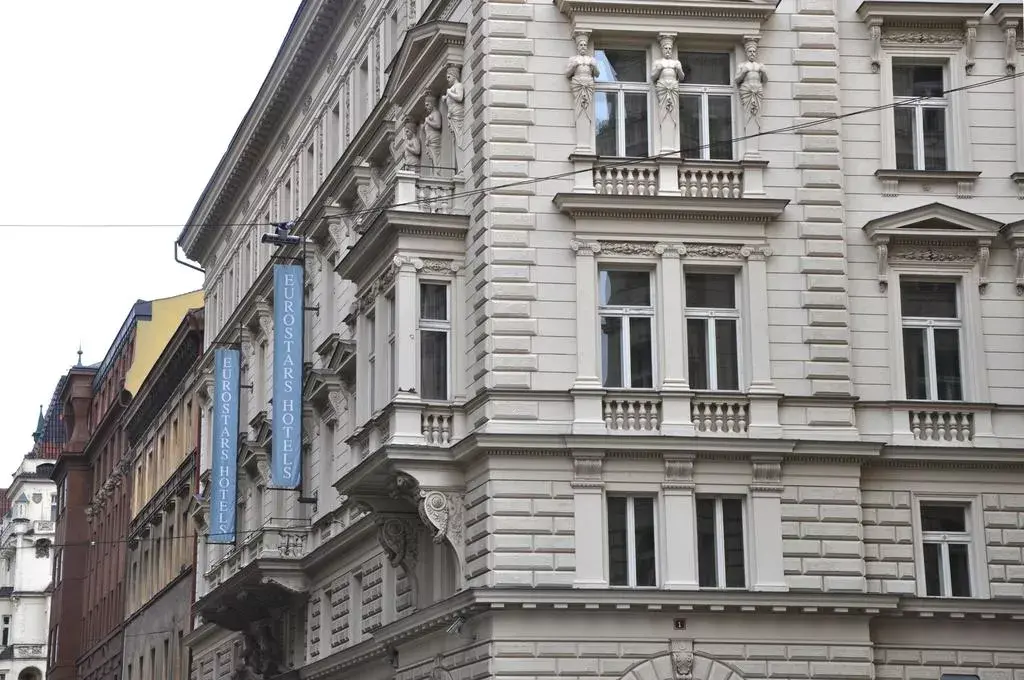
The Eurostars David Hotel provides an exceptional conference rooms area . Equipped with an up-to-date audio-visual technology, they also provide sunlight. We offer a wide range of coffees, appetizers, enterprise and celebration menus, and an efficient staff whom will attend any need you might have.
Hotel Eurostars David is 190 m from Dancing House.
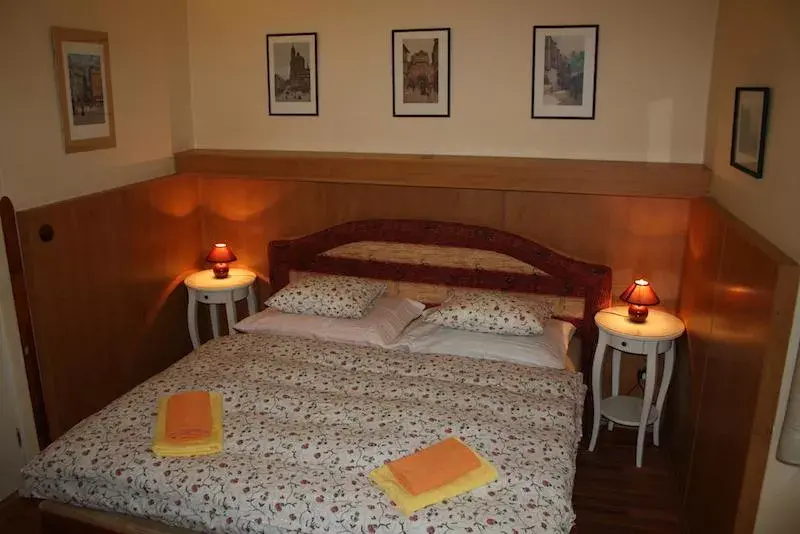
Apartments Zderaz are located in the center of Prague. Famous Wenceslas Square and Charles Bridge is just about 10 minutes walk. All apartments have free wi-fi. There is also private parking.
Apartments Zderaz is 250 m from Dancing House.
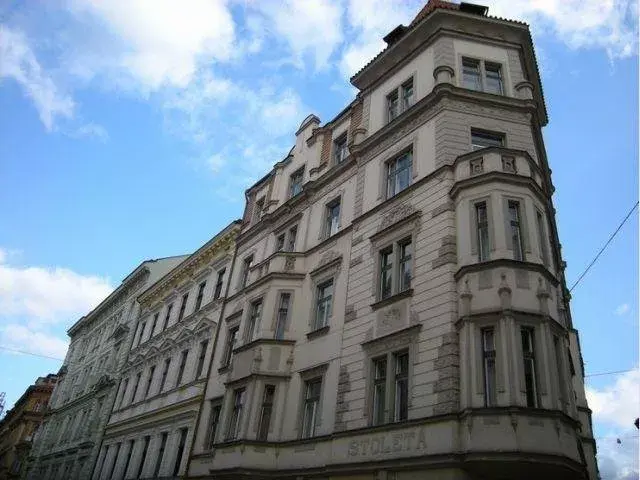
Hostel Emma, from category cheap accommodation in Prague, is situated in the centre of Prague, just 2 minutes of walk from Charles Square and 5 minutes from the Charles Bridge (Karluv most). If you want to enjoy the night life of Prague, you'll be satisfied in our hostel. In its vicinity, there are many clubs, discos, cosy pubs and bars. The Emma hostel is in the centre of Prague, you don't have to spend your money on trams, buses and the underground.
Hostel Emma is 270 m from Dancing House.
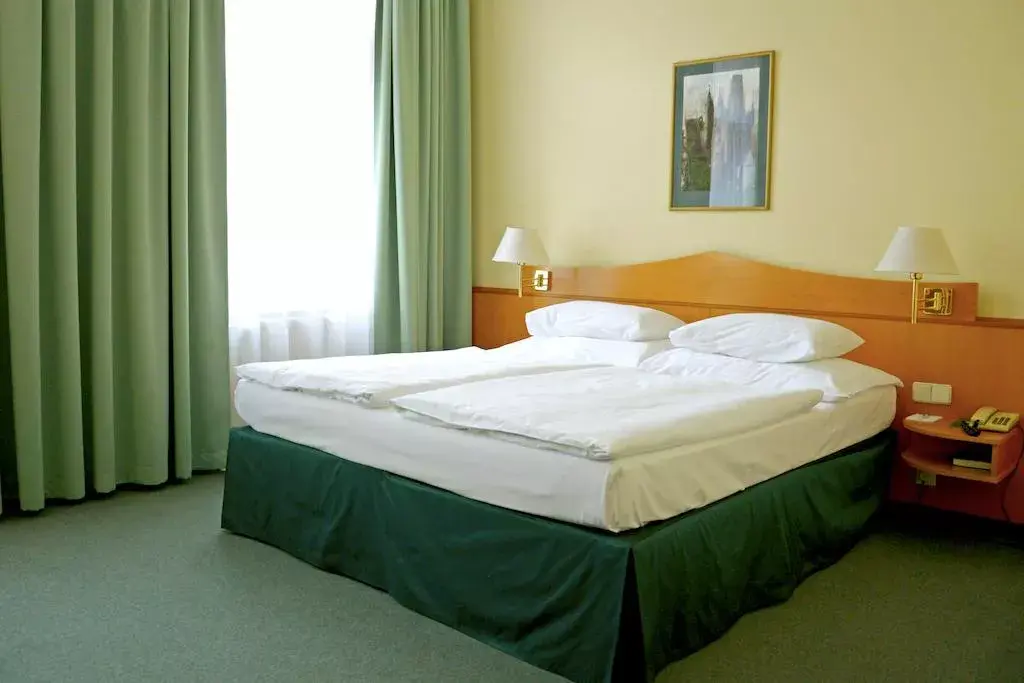
The BW City Hotel Moran, from category 4 star Prague hotels, is situated in Prague centre, close to the river Vltava and the Old Town of Prague. Within walking distance you will find most of Prague’s stunning sights, such as the National Theatre, Charle’s Bridge, Wenceslas Square, Prague Castle or the medieval town center.
BW Hotel City Moran is 280 m from Dancing House.
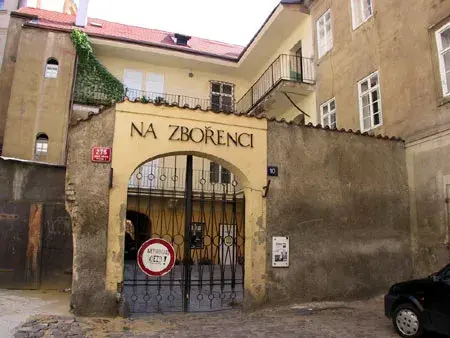
Prague Hostel Na Zborenci is nice cheap Prague hostel located in the Prague centre only few minutes from the Charles Bridge and Wenceslas Square. The building is former monastery which was annexed to St. Peter and Paul church in the year 1190.
Hostel Na Zborenci is 310 m from Dancing House.
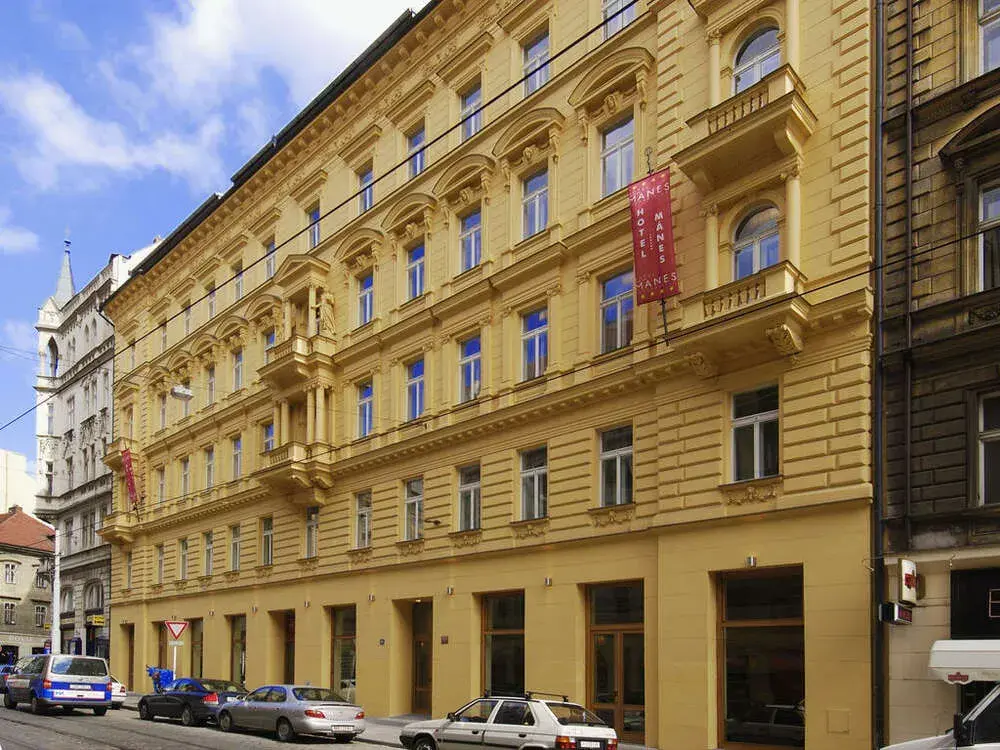
Prague Hotel Manes, from the category 4 star Prague luxury hotels, is situated in attractive location of the Prague New Town (Praha Nové Město), close to the embankment of Vltava River. Thanks to its excellent location, this Prague hotel is close to many historical and cultural monuments, museums, theatres and other points of interest in the historical part of Prague.
Hotel Manes is 340 m from Dancing House.
Page 1 of 49
Showing 1 - 12 / 584
Dancing House
The Dancing House (Czech: Tančící dům) or Fred and Ginger is the nickname given to the Nationale-Nederlanden building in Prague, Czech Republic, at Rašínovo nábřeží (Rašín's riverbank). It was designed by the Croatian-Czech architect Vlado Milunić in co-operation with Canadian-American architect Frank Gehry on a vacant riverfront plot. The building was designed in 1992 and completed in 1996. The very non-traditional design was controversial at the time because the house stands out among the Baroque, Gothic and Art Nouveau buildings for which Prague is famous and in the opinion of some it does not accord well with these architectural styles.
The Dancing House (Czech: Tančící dům) or Fred and Ginger is the nickname given to the Nationale-Nederlanden building in Prague, Czech Republic, at Rašínovo nábřeží (Rašín's riverbank). It was designed by the Croatian-Czech architect Vlado Milunić in co-operation with Canadian-American architect Frank Gehry on a vacant riverfront plot. The building was designed in 1992 and completed in 1996.
The very non-traditional design was controversial at the time because the house stands out among the Baroque, Gothic and Art Nouveau buildings for which Prague is famous and in the opinion of some it does not accord well with these architectural styles. The then Czech president, Václav Havel, who lived for decades next to the site, had avidly supported this project, hoping that the building would become a center of cultural activity.
Gehry originally named the house Fred and Ginger (after the famous dancers Fred Astaire and Ginger Rogers – the house resembles a pair of dancers) but this nickname is now rarely used; moreover, Gehry himself was later "afraid to import American Hollywood kitsch to Prague", and thus discarded his own idea.
Origin
The “Dancing House” is set on a property of great historical significance. Its site was the location of a house destroyed by the U.S. bombing of Prague in 1945. The plot and structure lay decrepit until 1960 when the area was cleared. The neighbouring plot was co-owned by the family of Václav Havel who spent most of his life there. As early as 1986 (during the Communist era) V. Milunić, then a respected architect in the Czechoslovak milieu, conceived an idea for a project at the place and discussed it with his neighbour, the then little-known dissident Václav Havel. A few years later, during the Velvet Revolution Havel became a popular leader and was subsequently elected president of Czechoslovakia. Thanks to his authority the idea to develop the site grew.[citation needed] Havel eventually decided to have Milunić survey the site, hoping for it to become a cultural center, although this was not the result.
The Dutch insurance company Nationale-Nederlanden (since 1991 ING Bank) agreed to sponsor the building of a house on site. The “super bank” chose Milunić as the lead designer and asked him to partner with another world-renowned architect to approach the process. The French architect Jean Nouvel turned down the idea because of the small square footage, but the well-known Canadian-American architect Frank Gehry accepted the invitation. Because of the bank's excellent financial state at the time, it was able to offer almost unlimited funding for the project. From their first meeting in 1992 in Geneva, Gehry and Milunić began to elaborate Milunić's original idea of a building consisting of two parts, static and dynamic ("yin and yang"), which were to symbolize the transition of Czechoslovakia (Czechia) from a communist regime to a parliamentary democracy.
Structure
The style is known as deconstructivist (“new-baroque” to the designers) architecture due to its unusual shape. The “dancing” shape is supported by 99 concrete panels, each a different shape and dimension. On the top of the building is a large twisted structure of metal nicknamed Medusa.
“In the interior of a square of buildings in the eighteenth and nineteenth century, the Dancing House has two central bodies. The first is a tower of glass that is close to half height and is supported by curved pillars, the second runs parallel to the river, which is characterized by the moldings that follow a wavy motion and distributed through the windows so the non-aligned.[clarification needed] This solution has been driven mainly by a kind of aesthetic consideration: the windows lined evidenciarían that the building has two windows, although they have the same height as the two adjacent buildings of the nineteenth century.[clarification needed] They also do not have to be perceived in the will of the designer, as simple forms on a flat surface, but must achieve the effect of three-dimensionality, hence the idea of frames as outgoing frames of paintings. Also the winding moldings on the facade make it more confusing perspective, diminishing the contrast with the buildings that surround it."
Awards
The general shape of the building is now featured on a gold 2,000 Czech koruna coin issued by the Czech National Bank. The coin completes a series called “Ten Centuries of Architecture”.